
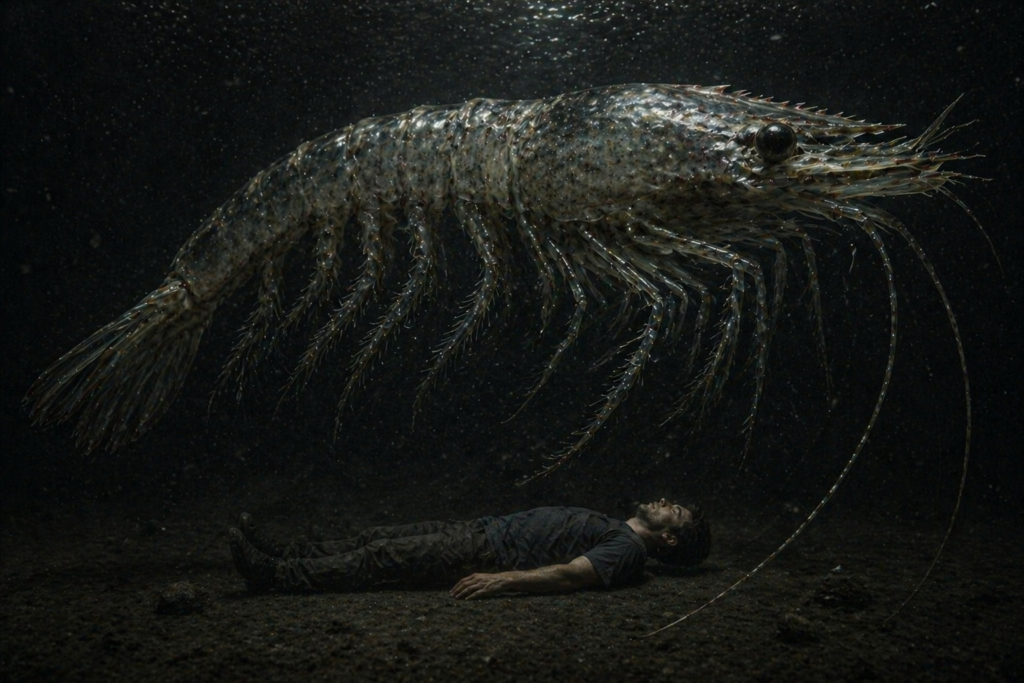
An alert has been put out to local people and visitors after several rotting remains of giant shrimps have been found at Loch Ness. Early DNA testing has suggested they are related to the species known as dikerogammarus villosus but these monster sized bugs are larger than humans.
Loch Ness Research leader, Professor Kettle spoke from his project’s HQ and said he is very concerned: “We assume these highly aggressive crustaceans have arrived inside the water tanks of ships and boats passing through the Caledonian Canal and, of course, Loch Ness is one part of that route”.
Dr. David Scallop is a visiting researcher from Australia and he echoed Kettle’s fear, “these critters don’t normally get this large but we know that this loch is linked to the sea, is nutrient rich and has an enormous reserve of food including eels, pike, trout and smaller fish. There is the added benefit of wild and farm animals straying into the water and the shrimps will take a bite out of anything”.
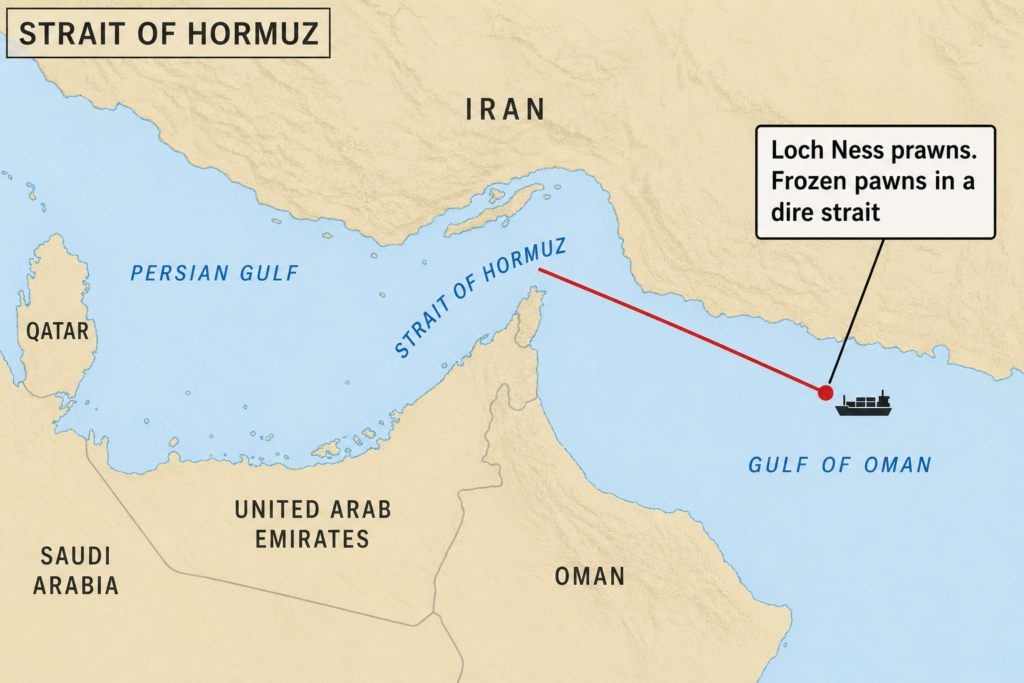
Professor Kettle said the plans are at an early stage to purge the loch of this menace and will make use of the super shrimp’s cannibalism. “We have purchased 5,000 tonnes of normal and apparently wastewater shrimps from the Far East and we’re going to set traps at different depths stuffed with this bait. Our main problem is getting the stuff here because currently our deep frozen cargo containers are stuck in The Strait of Hormuz. All we can do is hope for an early resolution to that conflict so that we can start this one in the loch.”
Everybody hopes the threat can be contained before the monster shrimps consume a human or the water’s famous resident, Nessie.
The Daily Telegraph (UK) reports that smaller shrimps related to the Loch Ness outbreak are terrorising England, Wales and other parts of Scotland.